
Meet the Offshoots Units
Offshoots is an elementary unit study program that allows you to customize learning in a way that works best for your family. Each unit is 4-weeks long, broken into four subtopics with 16 days of detailed lessons. These topics allow for a deeper dive into each unit. The units in Offshoots were specifically chosen for their rich vocabulary, ability to translate across domains, and depth of topic.
Below is a brief description of each unit to help you decide which ones will be best for your family. We recommend 6-8 units to round out a full homeschool year of learning.
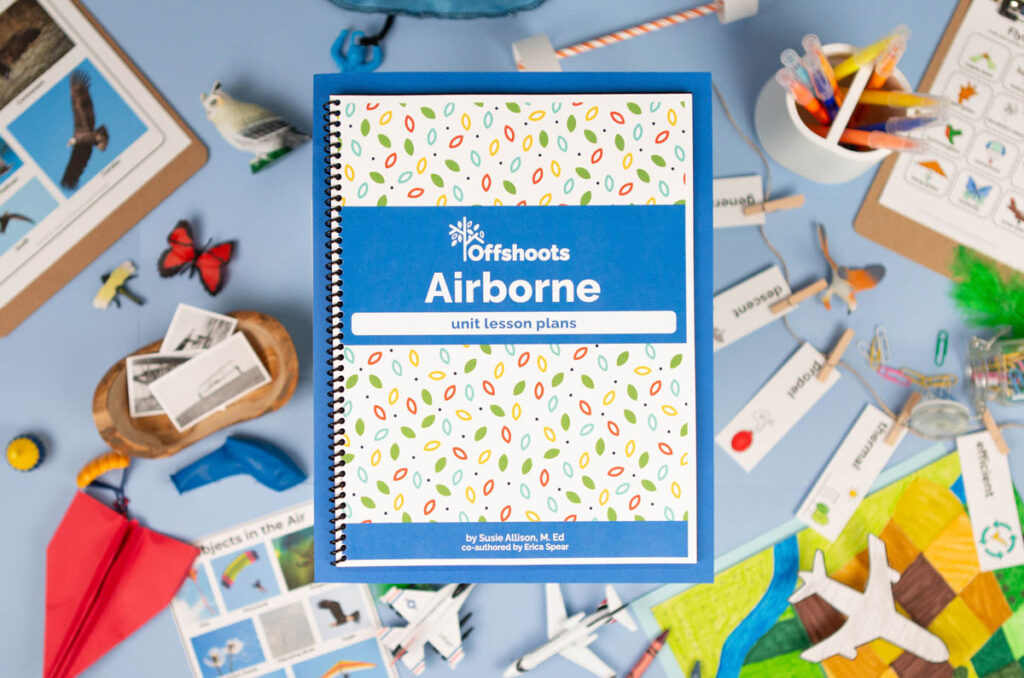
Airborne
Subtopics: Forces of Flight, Powered Flight, Gliding in Air, Floating with Air Resistance
This is far from a traditional unit on flying. Children will first learn about the four forces of flight, applying them not only to airplanes but also to many other flying objects and organisms.
You will then explore flight by propulsion (engines or wings), the art of gliding, and how air resistance can be used to stay airborne longer. The diverse use of the air—by animals, humans, and even plants—will be discussed throughout the unit in addition to multiple-meaning words, repetition in poetry, and making inferences to answer complex questions.
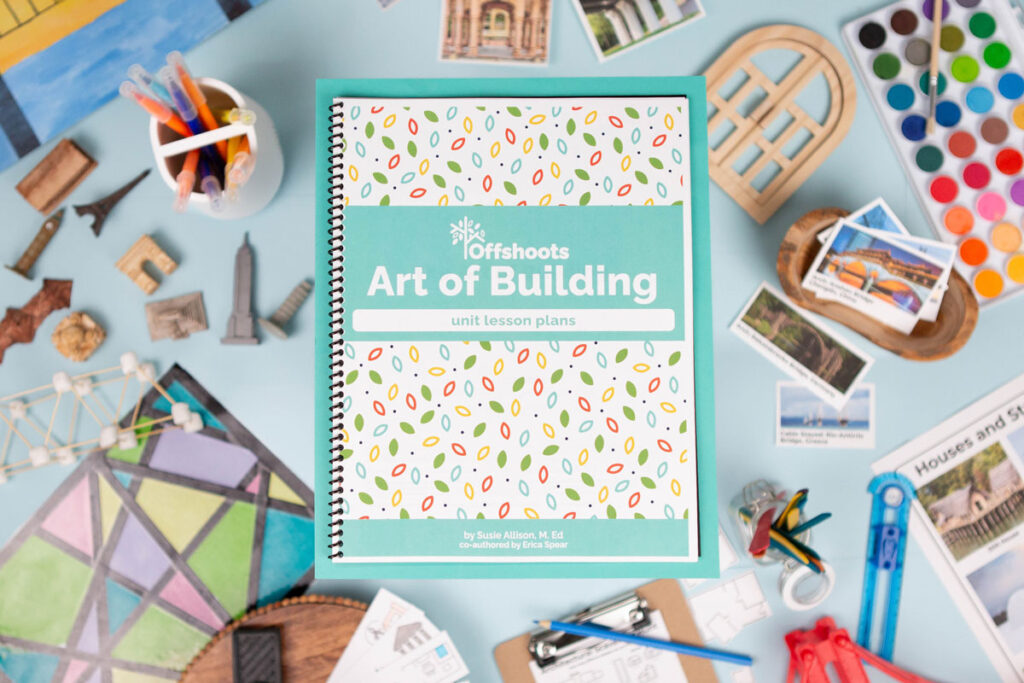
Art of Building
Subtopics: How People Build, Anatomy of Design, Building Solutions, Beauty & the Building
An architecture meets social studies unit where your family will explore how buildings are designed and constructed around the world. You will investigate famous landmarks while learning about the engineering solutions that help structures stand strong.
From bridge building to two-voice poems, this unit crosses into every learning domain. This highly-applicable unit is filled with knowledge to help children appreciate the beauty and construction of buildings.
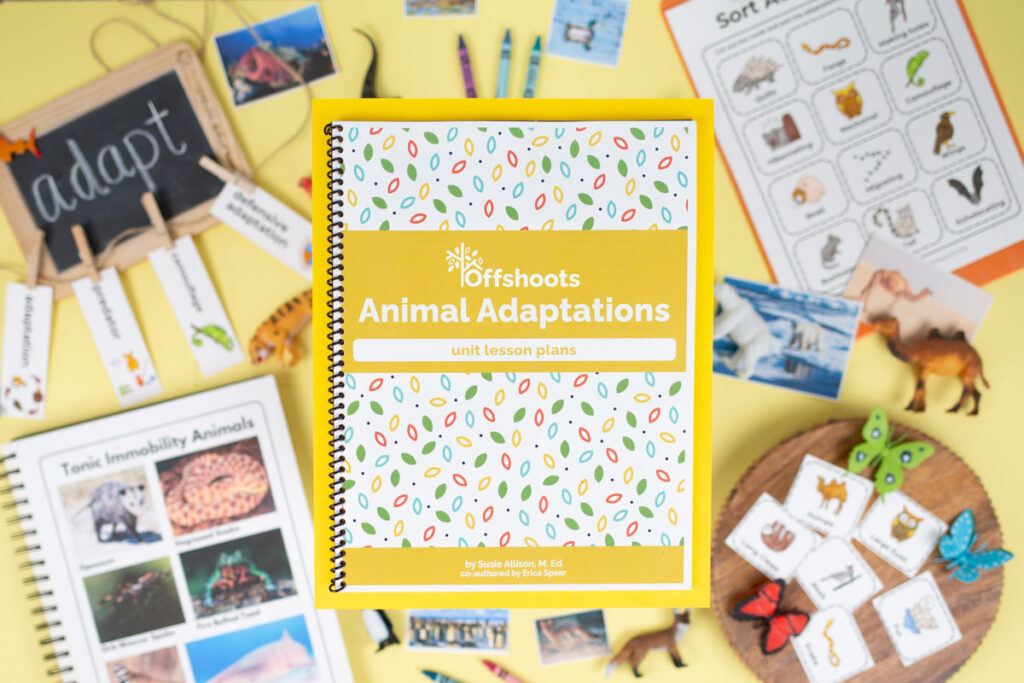
Animal Adaptations
Subtopics: Understanding Adaptations, Physical Adaptations, Behavioral Adaptations, Adaptations by Habitat
This magnificent unit introduces children to the wide variety of adaptations across the animal kingdom. It focuses on understanding the differences between behavioral and physical adaptations, as well as the impact of habitat on adaptations. The unit also explores classifications, comparative thinking, scientific inquiry, and life sciences.
Animal Relationships
Subtopics: Animal Groups, Strong Alliances, Uneven Pairings, Costly Connections
Beginning with a traditional look at animal relationships within the same species, this unit then takes a sharp twist into symbiotic relationships. How do animals interact with other animal species? Why do social behaviors exist between different animals? Can animals really trust another species?
Throughout this unit, a variety of fascinating animal relationships will be explored, from the mutually beneficial to the parasitic and harmful.
Classic Tales
Subtopics: Fairy Tales, Fables, Legends, Myths
This enchanting unit broadens children’s exposure to literature through fairy tales, fables, legends, and myths – but it goes far beyond being just a language arts unit with an exploration into each tale’s unique characteristics.
As children learn about literary devices and techniques, like onomatopoeia, they’ll also develop math and engineering skills while engaging in scientific thinking.
Communication & Codes
Subtopics: The Origins of Communication, The Rise of Writing, Messages on the Move, Modern Communication
Take a social studies unit journey through human history following the progression of communication. From nonverbal gestures and cave paintings to radio and television, this unit weaves historical events into hands-on learning. Interested in codes? Wondering about hieroglyphics? Curious about the Pony Express?
The way humans share ideas across time and distance takes center stage, from cuneiform to carrier pigeons, in this highly engaging and superbly crafted unit.
Dinosaurs
Subtopics: Exploring Dinosaurs, Carnivores, Herbivores, Fossils
This thrilling unit takes your family to the Mesozoic Era where you will encounter theropods, sauropods, and ornithischians galore!
The extinct will come back to life through an in-depth look at the world of dinosaurs as well as root words, prefixes, Earth’s history, cause-effect reasoning, and research skills, all through hands-on learning and engaging discussions.
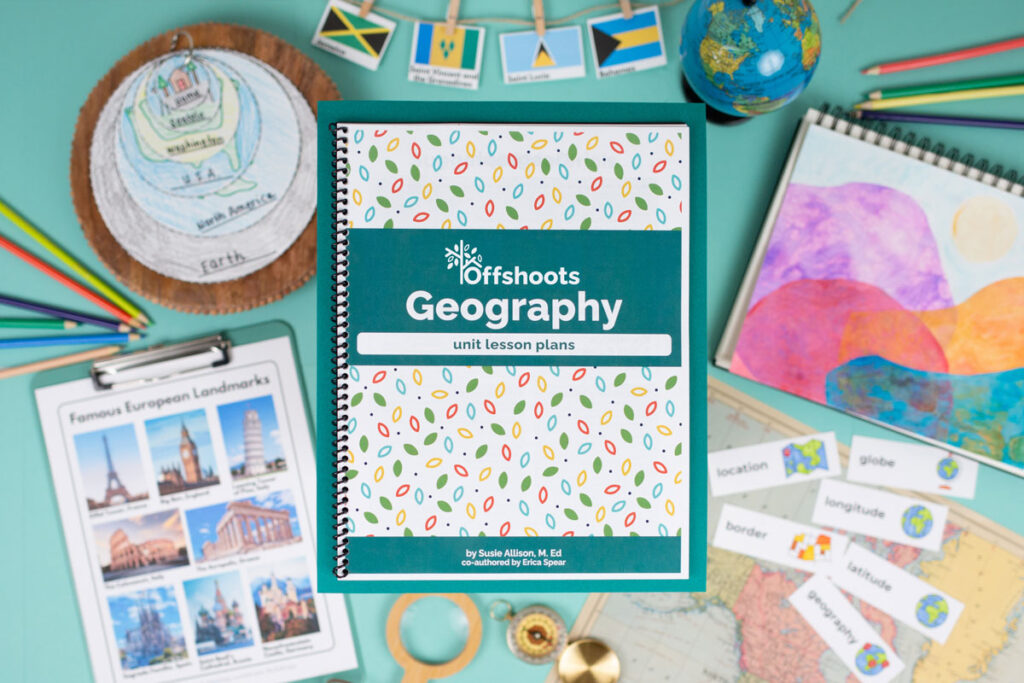
Geography
Subtopics: Maps & Directions, Dividing the Earth, the Continents
This engaging unit invites children to broaden their understanding of Earth and the world around them. Through two distinct sections of learning, you’ll explore maps, coordinates, hemispheres, poles, and cardinal directions; then take a journey across Earth’s seven vibrant and unique continents.
The unit also explores scale measurements, Earth sciences, superlatives, adjectives, and proper nouns.
Landforms
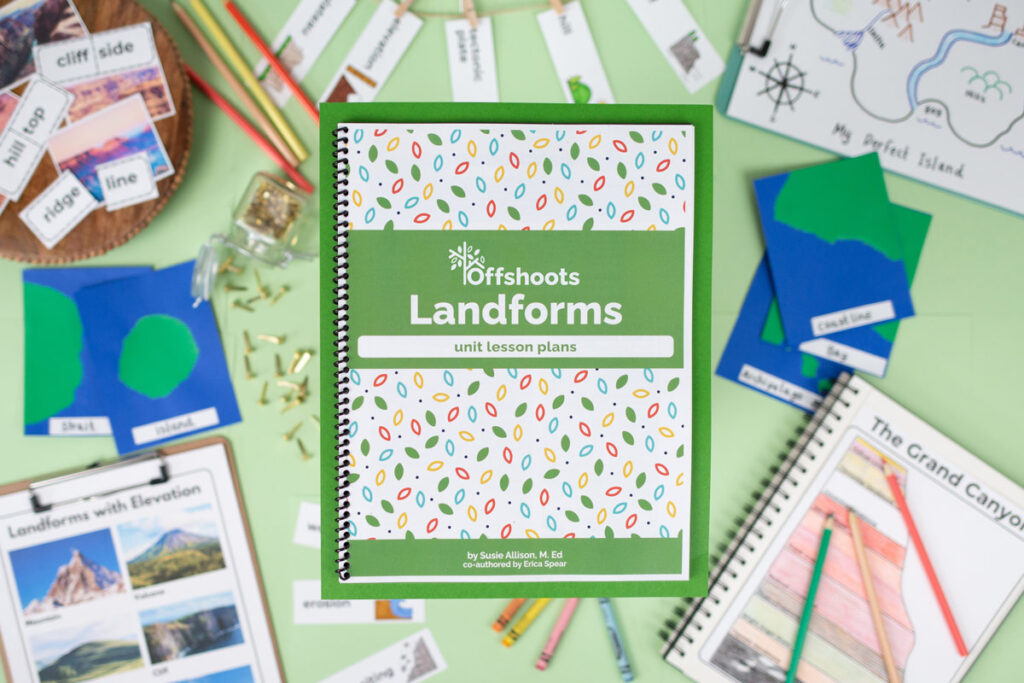
Subtopics: Exploring Landforms, Elevated Landforms, Pits & Passes, Land Meets Sea
This investigative unit explores Earth science processes and the “why” behind our planet’s diverse natural terrain. Landform creation, the immense variety of landforms that exist (from rift valleys to archipelagos), and the differences between quick and slow changes to Earth are all explored in hands-on, engaging activities.
Additionally, this unit delves into compound words, adverbs, and cause and effect, while encouraging engineering and problem solving.
Plant Problem Solvers
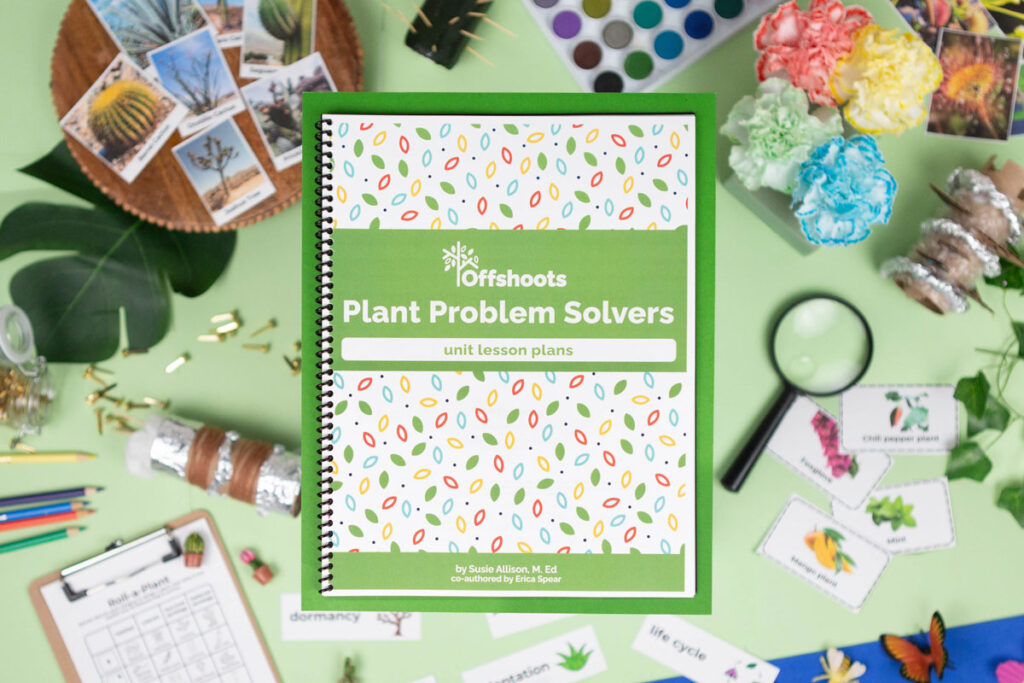
Subtopics: Solving for Survival, Food & Fuel Problems, Making More Plants, Plants Fighting Back
A botany-based unit with a problem-solving twist! Your family will explore plant adaptations through the lens of survival. From habitat challenges to reproduction and seed dispersal, plant structures and defenses are examined as problem solving tools for success. Did you know some seeds explode to disperse? Curious about carnivorous plants? Ever wondered why certain vegetables are spicy? These are all solutions to plant problems.
Filled with hands-on experiments, games, role-playing, and engaging activities, this unit is anything but a traditional look at plants.
Rocks & Minerals
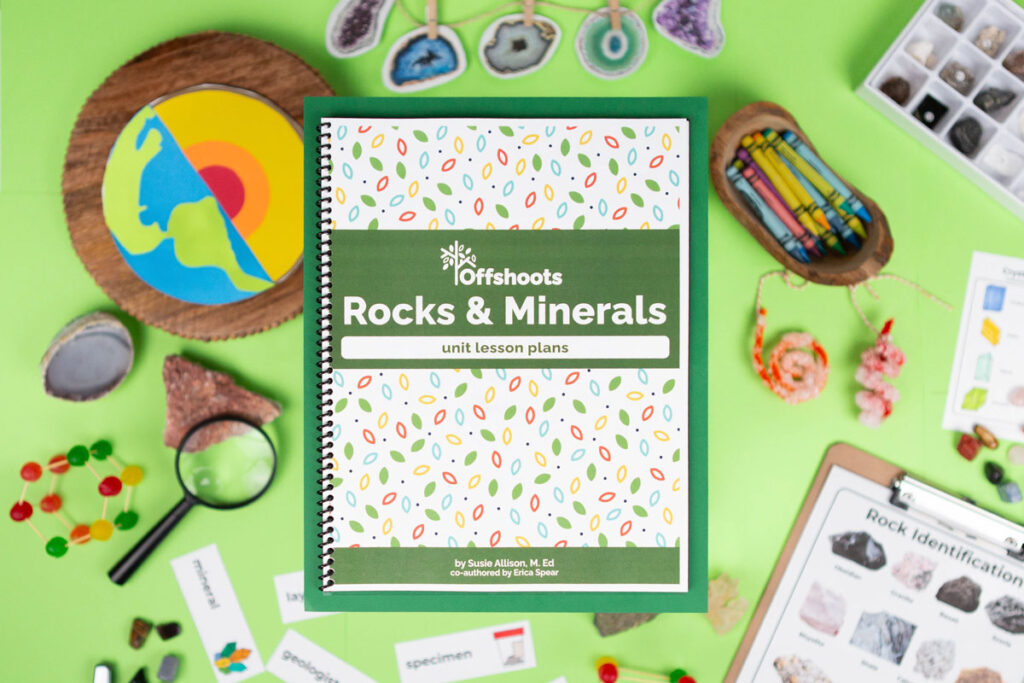
Subtopics: Geology Overview, Meet the Minerals, Geology Rocks!, The Rock Cycle
Calling all rock hounds! Take an in-depth look at the objects literally holding the world together and filling your pockets: rocks and minerals. The unit begins with an introduction to geology and uncovers the important role rocks and minerals play in everyday life. This unit also explores the use of precise language and context clues.
Discover what a mineral actually looks like while making hands-on models of crystal systems. Build familiarity with the three categories of rocks in engaging activities. Then, spend a week investigating the rock cycle to discover how rocks are continuously created, changed, and reused by Earth.
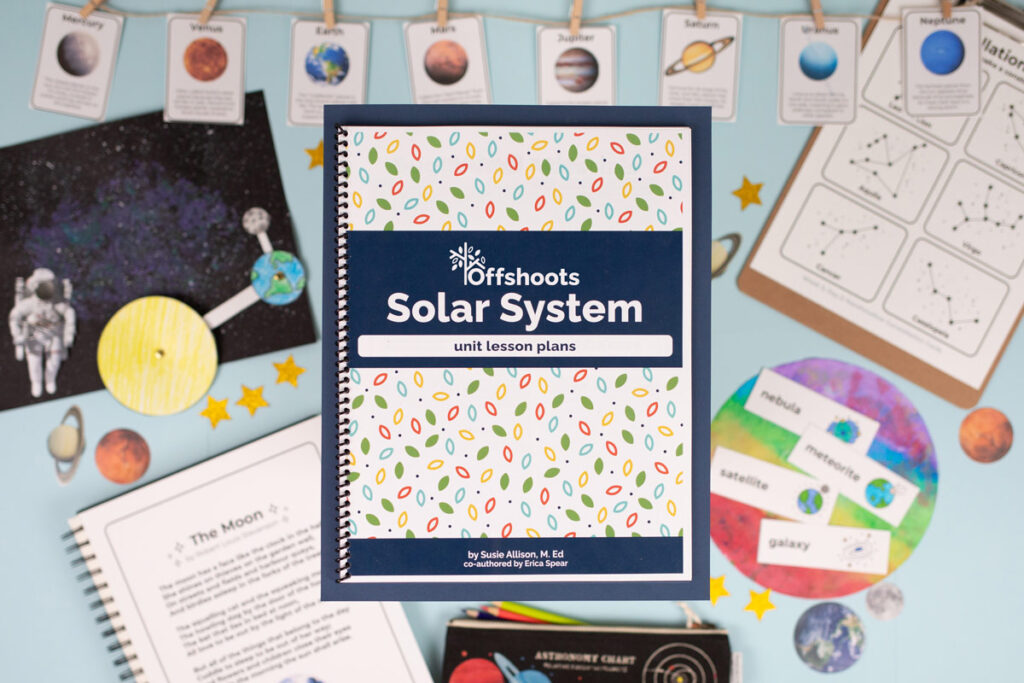
Solar System
Subtopics: The Planets, Sun & Moon, Stars & Constellations, Space Rocks
This awe-inspiring unit takes your family on a journey through an abstract concept: astronomy. Space is made real through hands-on learning and multimedia materials that work together to build conceptual understanding of a complicated topic.
As you journey through space, you’ll also explore scale models, ordinal numbers, rhyming poetry, and adjectives. An important feature of this unit is the emphasis on note-taking skills – and growing this skill no matter the age or writing level.
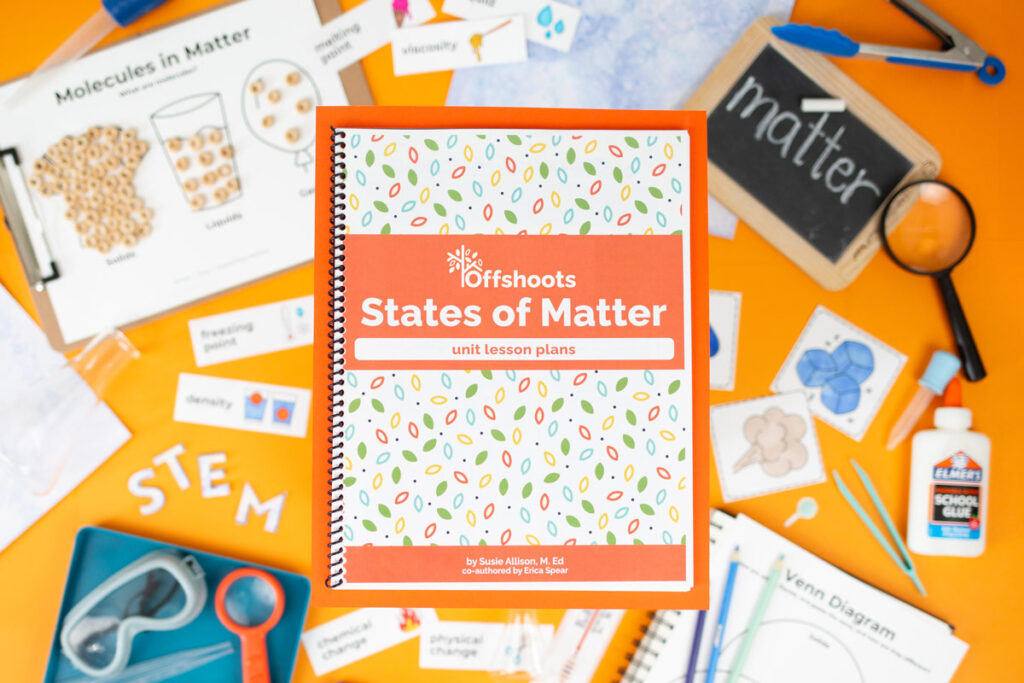
States of Matter
Subtopics: Exploring Matter, Solids, Liquids, Gases
While this exploration-based unit looks explicitly “science-y” from the outside, scientific knowledge is just the tip of the iceberg in this cross-curricula study. Learn about molecules and the principal states of matter as you explore cinquain poetry, adjectives, and watercolor art. There’s also an emphasis on vocabulary in this unit, leaning into texture words and adjectives to describe matter.
Filled with easy-to-set-up experiments and meaningful demonstrations, the States of Matter unit brings a complex topic to life.
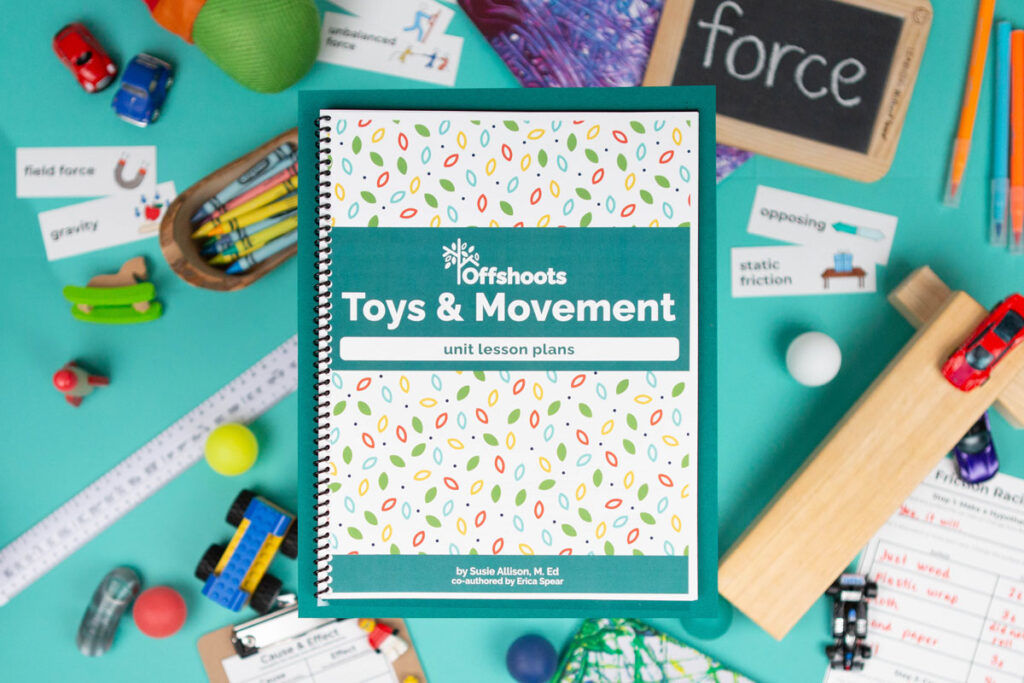
Toys & Movement
Subtopics: How Toys Move, The Power of Friction, Gravity at Play, Movement Rules
Learning doesn’t get any more fun or applicable to children than this! You’ll explore the principles of physics- force, friction, motion, and gravity- all through toys and games. Trips to the playground, experiments with toys, and twists on childhood games bring excitement and movement to this full-body unit. You’ll explore cause and effect and the interconnectedness of the principles of physics through play.
The unit culminates with Newton’s laws of motion presented through child-friendly, toy-centered demonstrations that will create lifelong memories.
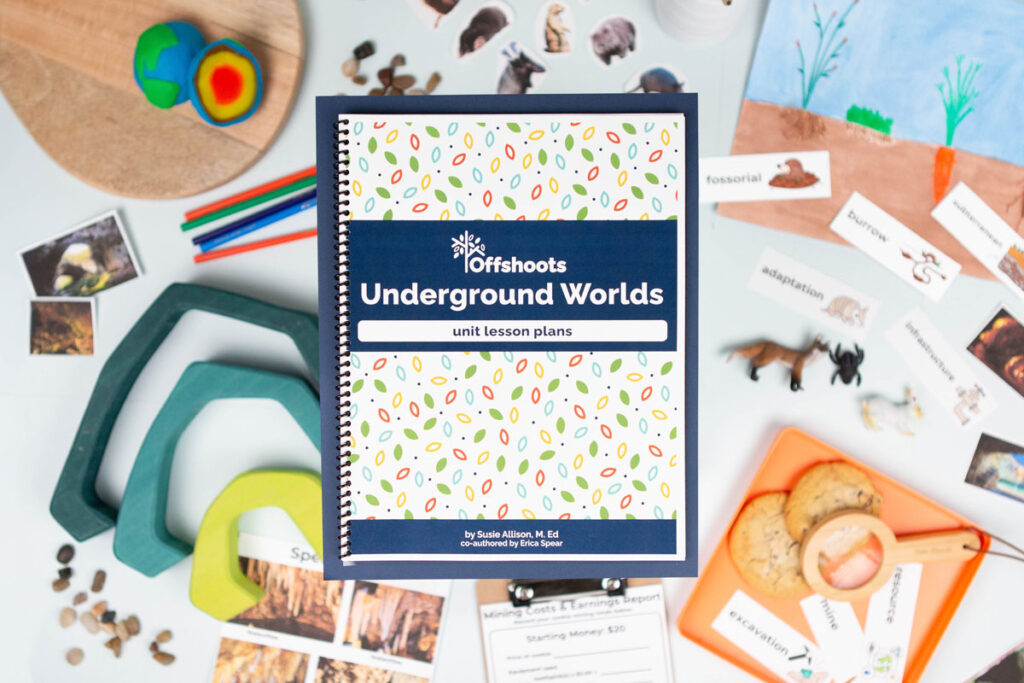
Underground Worlds
Subtopics: Welcome Underground, Cave Systems, Burrowers Below, Humans Underground
Head to the underground in this creative, vocabulary-rich unit exploring what lies beneath our feet. In this subterranean study, your family will spend four weeks discovering hidden worlds- from root systems and Earth’s layers to caves, speleothems, and fossorial animals. You’ll also study humanity’s reliance on underground resources.
Uncover new ways to understand the world beneath your feet, while also learning about personification, affixes, and prepositions.
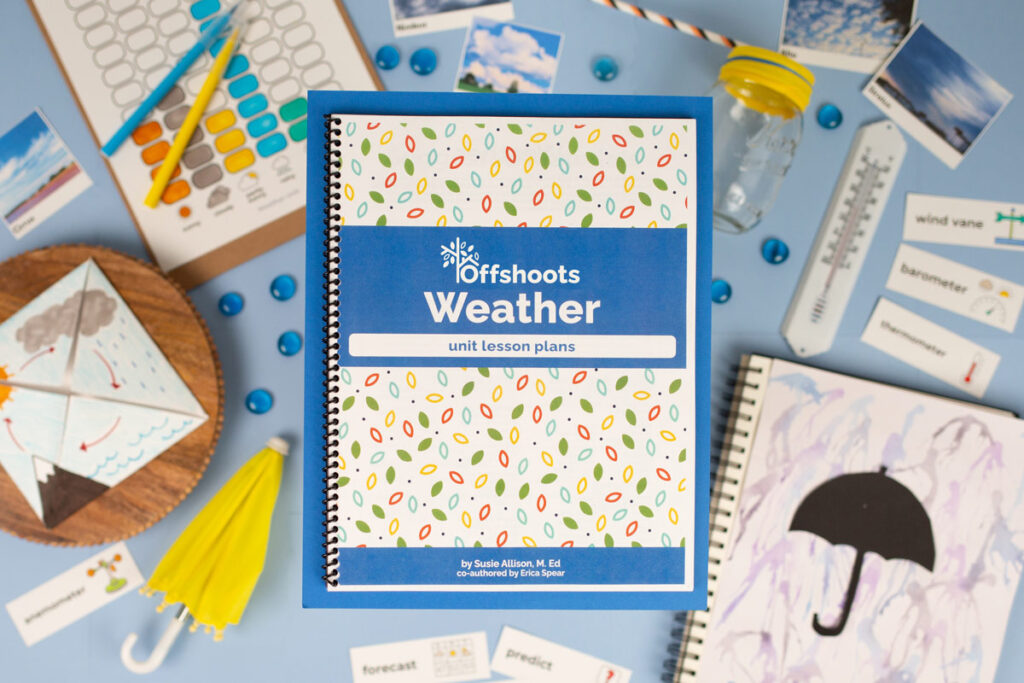
Weather
Subtopics: Exploring Weather, Weather Instruments, Clouds, the Water Cycle
This is not a “What’s the weather like today?” weather unit. This knowledge-heavy deep dive begins by introducing the six elements of weather, then moves into studying and creating various weather tools used by meteorologists. Can you build an anemometer? Will a homemade barometer work? You’ll also study cloud formations and the water cycle as your appreciation for weather systems grows.
This unit is rich with experiments and hands-on exploration of a complex topic. Children will also learn about limericks, root words, similes, and cause and effect.
Meet Offshoots
A new path for learning
Multi-age unit studies designed for the whole family to learn together.